Brennan
The name “Brennan” has Irish origins and is derived from the Gaelic surname “Ó Braonáin.” Here’s a breakdown of its meaning and origin:
- Meaning: The name “Brennan” is derived from the Gaelic word “braon,” which means “sorrow” or “drop of water.” As such, “Ó Braonáin” can be translated to “descendant of Braonán,” with “Braonán” being a diminutive form of “Braon,” potentially meaning “little sorrow.”
- Origin: The surname Brennan is historically associated with various regions in Ireland, including counties Kilkenny (where it was first found), Westmeath, and Galway. It was originally a clan name, with families spreading throughout Ireland over the centuries.
- Variants: There are several variations of the name, including “Ó Braonáin,” “Brannigan,” and “Brannon.”
The name Brennan is relatively common in Ireland and among Irish communities around the world
Brennan Settlers in New Zealand in the 19th Century
(https://www.houseofnames.com/au/brennan-family-crest)
- Joseph Brennan, aged 22, a tailor, who arrived in Nelson, New Zealand aboard the ship “Prince of Wales” in 1842
- Mary Brennan, aged 21, who arrived in Nelson, New Zealand aboard the ship “Prince of Wales” in 1842
- Mr. Patrick Brennan, British settler, as the 2nd Detachment of New Zealand Corps of Royal New Zealand Fencibles travelling from Gravesend aboard the ship “Minerva” arriving in Auckland, New Zealand on 8th October 1847
- Mr. James Brennan, British settler as part of the 8th Detachment of the Royal New Zealand Fencibles travelling from Gravesend aboard the ship “Oriental Queen” arriving in Auckland, New Zealand on 18th September 1849
- Ellen Brennan, who arrived in Auckland, New Zealand aboard the ship “Gipsy” in 1854
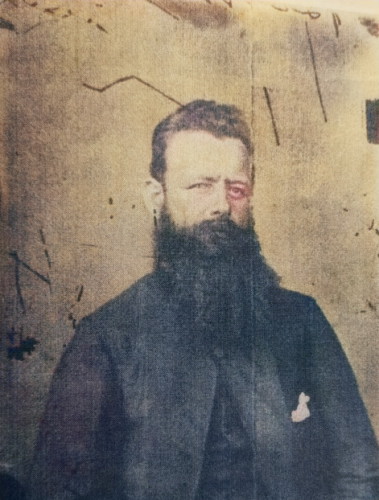
For this family the Brennan line came from Canada in the person of John Brennan (1846-1904) who settled on the West Coast.
A former seaman he served in the NZ Armed Constabulary NZ Militia, Volunteers (1867-70) and Armed Constabulary of New Zealand 1863-1871. This suggests that he arrived in New Zealand around 1860. It is not clear whether he was born in Plymouth, England, or St john Brunswick, Canada, but the latter is the more likely.
In New Zealand he married Ann Henaghan (1855-1899)of Wanganui in 1877. She was from County May in Ireland.
Phillip
meaning and origin of Phillip
The name “Phillip” (or “Philip”) has a classical history:
- Meaning: The name is of Greek origin, derived from the Greek name “Philippos,” which means “lover of horses.” It combines two elements: “philos” (loving) and “hippos” (horse).
- The surname Phillip was first found in Normandy (French: Normandie), the former Duchy of Normandy, where they held a family seat as an aristocratic family at Marigny.
- Historical Significance: The name was borne by several notable historical figures, including Philip II of Macedon, the father of Alexander the Great. This connection gives the name a strong historical and regal association.
- Variants: There are various spelling variations, including “Philip,” “Phillip,” “Philippe” (French), and “Felipe” (Spanish).
- Popularity: The name has been popular in various cultures and continues to be widely used today.
Phillip Settlers in New Zealand in the 19th Century
- Thomas Phillip, who landed in Bay of Islands, New Zealand in 1840
- Henry J Phillip, who landed in Wellington, New Zealand in 1840
- Charles Phillip, aged 20, a labourer, who arrived in Wellington, New Zealand aboard the ship “Ionic” in 1884
- Arthur Phillip, aged 15, who arrived in Wellington, New Zealand aboard the ship “Ionic” in 1884
Tweedale
The surname “Tweedale” has Scottish origins and is believed to be a habitational name. It is derived from the place name “Tweeddale” in the Scottish Borders region2. The name is composed of two elements: “Tweed,” referring to the River Tweed that flows through the area, and “dale,” meaning valley. So, “Tweedale” essentially means “valley of the Tweed River.”
The Tweedale family was first established in Dumfriesshire, Scotland, and members of the clan were influential in various fields such as politics, literature, science, and the arts The surname Tweedale was first found in Peebles-shire where they held a family seat from very ancient times, in the barony of Kilbucho.
James Tweedale, aged 20, a joiner, arrived aboard the ship “Philip Laing” in 1848
Our family came to NZ quite late in the person of Margaret Tweedale (1936-2024). She married Norman Phillip (1930-2015) born in India and dying in Canada.
Flyger
The surname Flyger is an Americanized version of the German name Pfleger. It most likely originated from descendants of Johan Volkmann Pflüger, a soldier from Germany who later had his family name spelled in a Danish way as Flyger.
It is not a common surname and is most commonly found in New Zealand, Denmark, and United States.
This family came to New Zealand quite early in the person of William Henry Flyger (1817-61) who must have been on one of the first ships into Wellington with his wife Amy Ann Lindsay (1819-1970). They were married in England in 1840.
He first occupied Luxford’s butchers shop, killing for Messrs Revans and Smith who built it. Later he traded between Sydney and Wellington, sailing in his own vessel the “Perseverance”, finally settling down in business as a merchant, buying the ware-houses built by Mr Fitzherbert in Farish Street. These were damaged in the fire of 1856.
William also had a sheep station on the east coast.
The had 8 children.
William was the 3rd ggfather of Jason.
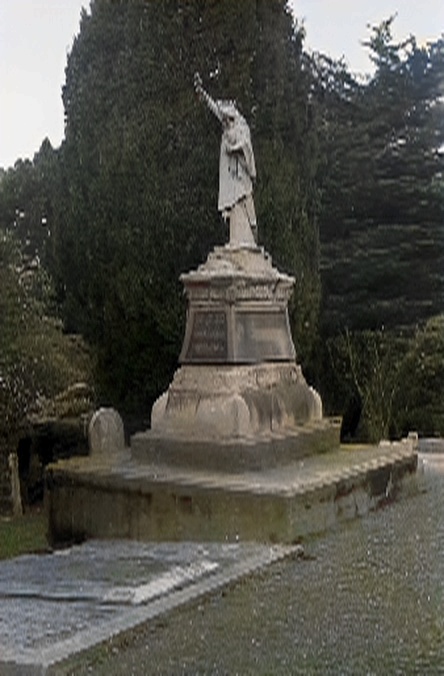
The Flyger family plot, Boulcott Cemetery, Wellington before dismantling for the motorway.